
Whoa!
Seriously? I know — blockchain explorers can feel like dark art sometimes.
My first impression was: somethin’ here is obscured, but you can peel the layers back.
At first glance a token tracker is just a list of balances and transfers, but actually it’s much more useful when you learn the patterns it hides and reveals, and that learning curve is what hooks you.
I’m biased toward tools that move fast and show raw data cleanly; they save time and often save you from dumb mistakes.
Here’s the thing.
Solana moves fast.
Really fast.
When a mempool fills or a marketplace goes wild you need an explorer that keeps pace, otherwise your read of on-chain events is stale and misleading—especially if you’re watching token flows during an IDO or a liquidity migration.
My instinct told me that not all explorers are equal, and that gut feeling held up after I started digging into raw transactions instead of summaries.
Hmm… the first time I chased a suspicious transfer I felt both frustrated and oddly excited.
I followed a token swap, then tracked the wrapped SOL movement through several accounts.
A dozen tiny transactions later I had a hypothesis.
Initially I thought it was just wash trading, but then realized the pattern matched a known liquidity-provision strategy used by market makers—so that was an “aha” right there.
Small details in transaction metadata revealed more than high-level dashboards ever could.
How token trackers and transaction logs actually help you
Short answer: they make invisible activity visible.
Medium answer: they show transfers, program calls, and token-mint events so you can verify provenance, trace funds, and audit minting.
Longer answer: by following token addresses through transfers, you can identify patterns — for example, repeated small transfers to many addresses can indicate airdrop distribution or bot activity, while clustered high-value transfers often signal treasury movements or whales rebalancing portfolios, and with that context you can make smarter decisions when trading or reporting.
On one hand a token tracker helps confirm legitimacy.
On the other hand you still need judgment; explorers don’t replace context or common sense.
Okay, so check this out—there’s a practical workflow I use every time.
Step one: copy the token mint address.
Step two: open an explorer and paste it into the search bar.
Step three: scan the most recent transactions, then look for program IDs that show interactions with Serum, Raydium, or a known AMM.
Sound simple? It is, but the nuance is in the details.
I’ll be honest: sometimes the UI gets in the way.
What bugs me is when an explorer collapses rich data into tiny icons.
I prefer raw logs and readable decoded instructions.
That level of transparency helps when you audit a contract or verify token supply changes.
Yes, decoding takes patience, but it’s worth it.
When you read transaction logs, watch for two things: program instructions and account relationships.
Program instructions tell you what action happened—swap, transfer, mint, initialize, close.
Account relationships show who touched what.
If one account repeatedly acts as an intermediary you might be looking at an aggregator or a bot.
On Solana, because most complexity is pushed into programs rather than accounts, decoded instructions are especially revealing.
At the emotional peak I had a moment where everything clicked.
A pattern of tiny SOL transfers was funding fee-extractors across multiple wallets.
I traced those wallets back to a set of contracts that were doing seemingly benign ops but had a fee-siphon embedded.
That discovery saved a client pain (and frankly some reputational damage).
Not bragging—just saying practical on-chain sleuthing pays off.
Where to go when you need a reliable explorer
Most explorers will do the job.
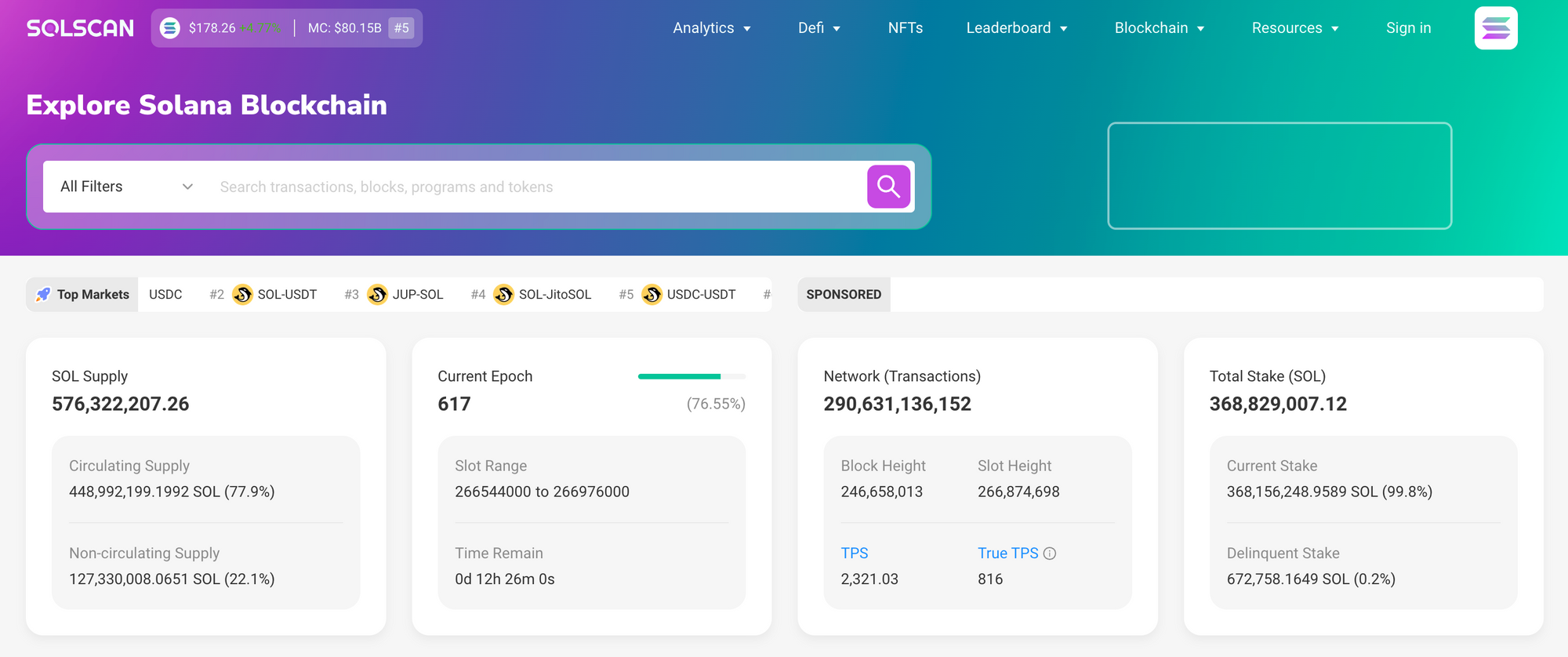
But if you want a clean token tracker and great decoded transaction views, try solscan for its balance of speed and clarity.
I started using it because it surfaced instruction-level details, and then I kept using it because of the search ergonomics and the way token holders list renders.
Actually, wait—let me rephrase that: I stuck with it because day-to-day it reduced friction and let me focus on pattern recognition rather than fighting the UI.
You can check it out here: solscan.
Some practical tips while you’re using an explorer.
First, verify the token mint on-chain against the project’s official channels.
Second, inspect multiple transactions instead of one to avoid confirmation bias.
Third, use the “holders” tab to see concentration—lots of supply in a few wallets is a risk signal.
And fourth, note program interactions; unusual programs can imply complex off-chain logic.
On the subject of SOL transactions: fees are low but still matter.
A flurry of tiny transfers can add up.
So watch fee-payers in transaction receipts.
Often the payer differs from the token sender when bots or relayers are involved, and that tells a story.
If the same fee-payer shows up across many token interactions, they might be running an automation layer.
Another practical hack: export CSVs when you can.
Analyzing data offline in a spreadsheet or a quick Python script often reveals trends faster than manual scrolling.
Yes, it’s extra work, but you’ll catch patterns like repeated offchain ordering or micro-structure that a UI overlooks.
I’m not 100% obsessive about it, but for audits and forensics it’s gold.
Little wins add up.
FAQ
How do I confirm a token’s total supply?
Look up the token mint and check the “supply” field in the mint account.
Then cross-reference recent mint and burn instructions in the transaction history to make sure there haven’t been unannounced supply changes.
If you see mint events tied to unknown program IDs, dig deeper—those are red flags.
What if I see many tiny SOL transfers to unknown wallets?
That can mean airdrops, dusting, or automated fee distribution.
Trace the fee-payer and program instructions.
If transfers correlate with specific program calls, it’s likely part of a protocol’s internal mechanics; if not, treat it suspiciously and investigate further.